“Use a private RPC” is common advice for Polygon developers and traders. The trouble is that people mean different things by it. Sometimes they mean a paid endpoint that is not shared with the whole internet. Sometimes they mean an endpoint that keeps transactions out of the public mempool. These are not the same, and confusing them can leave you exposed. This article compares public, dedicated and private RPC endpoints on Polygon, and explains how to tell which one you are actually using.
In short: a public RPC is a shared, free endpoint. A dedicated RPC is capacity reserved for you, which improves reliability but usually still broadcasts your transactions to the public mempool. A private RPC, in the sense that matters for MEV, routes your signed transactions privately toward block production. Many teams use a dedicated or public RPC for reads and a private RPC for writes.
Three things called “RPC”
Public RPC endpoints
Public endpoints are shared, free URLs that anyone can use, often listed in wallet settings or chain directories. They are convenient for getting started and for light use.
- Pros: free, no sign-up, widely supported.
- Cons: rate limits, variable reliability, no service guarantees, and every transaction you send is broadcast to the public mempool.
Dedicated RPC endpoints
Node providers sell endpoints with reserved capacity, higher rate limits, archive data, websockets and support. These are often called “private endpoints” because the URL and capacity are yours.
- Pros: reliability, performance, higher limits, extra APIs.
- Cons: cost, and, importantly, sending a transaction through a dedicated endpoint usually still means it is gossiped to the public mempool like any other.
Private transaction RPC (private submission)
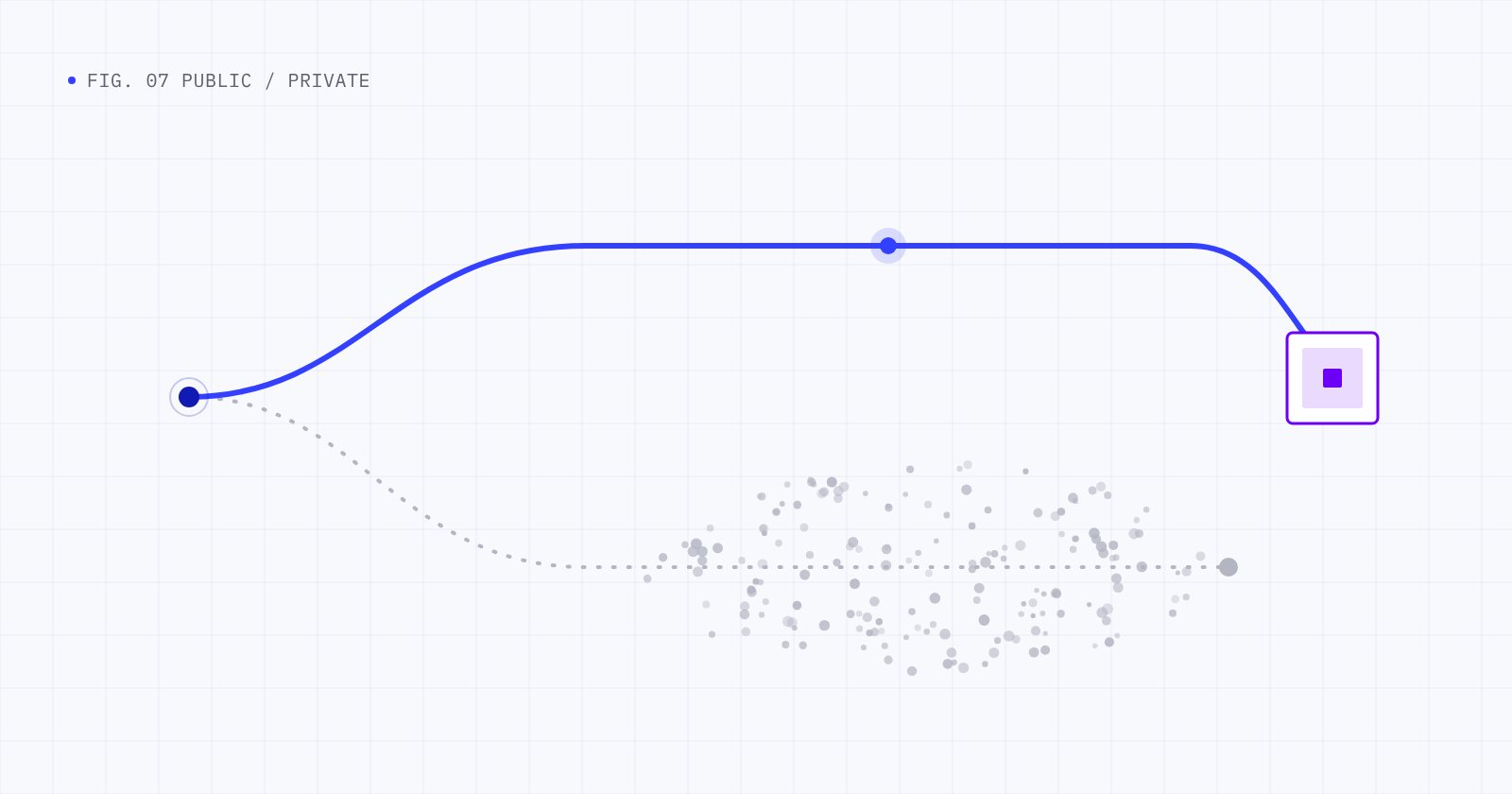
A private transaction RPC is about what happens to your signed transactions. It does not gossip them to the public peer-to-peer network. It forwards them through private infrastructure toward block production. On Polygon, this is offered by independent providers such as Hyperstrate and, since April 2026, by Polygon Labs’ Private Mempool.
- Pros: pending transactions are not visible in the public mempool, which reduces exposure to frontrunning and sandwich attacks.
- Cons: you rely on the private route and its operator; a provider may charge a service fee; it may handle only transaction submission, not reads.
Side-by-side comparison
| Feature | Public RPC | Dedicated RPC | Private transaction RPC |
|---|---|---|---|
| Typical cost | Free | Subscription or usage-based | Per transaction or subscription |
| Rate limits | Shared, often strict | Higher, yours | Depends on provider and plan |
| Good for reads | Light use | Yes | Depends on provider |
| Pending transaction visible in public mempool | Yes | Usually yes | No |
| Exposure to mempool-based MEV | Yes | Usually yes | Reduced |
| Visible on Polygonscan after inclusion | Yes | Yes | Yes |
A dedicated endpoint is not automatically private
This is the most important point in this article. Paying for an endpoint changes who shares the server, not what the server does with your transaction. Unless the provider explicitly offers private submission, a transaction sent through a dedicated endpoint is passed to a Polygon node, enters its transaction pool and is gossiped to the network. Bots watching pending transactions see it just as they would from a free public endpoint.
If protection from frontrunning and sandwiching is your goal, ask specifically: “Is my signed transaction broadcast to the public mempool, or routed privately toward block production?”
How to check what your endpoint does
- Read the documentation. Private submission is a feature providers describe explicitly. If it is not mentioned, assume transactions are broadcast publicly.
- Ask the provider the routing question above, and who can see a transaction before inclusion.
- Watch the public mempool. Using a separate, ordinary node or service that streams pending transactions, send a low-value test transaction through the endpoint and see whether it appears as pending before it is included. Treat this as a rough check: absence from one view is not proof of privacy.
When to use each
- Public RPC: prototypes, testing, occasional reads, simple transfers where visibility does not matter.
- Dedicated RPC: production reads, indexing, event subscriptions, archive queries, and transactions where mempool visibility is not a concern.
- Private transaction RPC: swaps, liquidations, rebalancing, large transfers, admin and time-sensitive operations, and any transaction whose value depends on ordering.
Combining them
You do not have to choose one. A common production setup is:
- Reads, estimates, nonces and receipts go to a dedicated or public RPC.
- Signed transactions go to the private endpoint.
- Status is tracked through the private provider’s status reporting and confirmed with receipts from the read RPC.
The full code for this pattern is in how to send private transactions on Polygon.
Frequently asked questions
Is a paid Polygon RPC the same as a private RPC?
Not necessarily. A paid or dedicated RPC gives you reserved capacity, but it usually still broadcasts your transactions to the public mempool. A private transaction RPC routes them privately toward block production.
Can I use a private RPC for reads too?
It depends on the provider. Some private submission endpoints handle only transactions. Using your existing provider for reads works with any private submission service.
Does a private RPC change gas fees on Polygon?
No. Network fees are set by Polygon’s fee market. A private provider may add its own service fee.
Will my wallet work with a private RPC?
Wallets that support custom RPC URLs can submit through a private endpoint if it accepts the wallet’s requests, including any authentication the provider requires.
Conclusion
Public, dedicated and private RPC endpoints solve different problems. Public endpoints are convenient, dedicated endpoints are reliable, and private transaction endpoints keep pending transactions out of the public mempool. The mistake to avoid is assuming that a dedicated endpoint gives you the third. For transactions that are worth protecting, route the write path privately and keep reads wherever they work best.
Hyperstrate is a private transaction RPC for Polygon. Learn how a Polygon private RPC works, see the developer examples, or contact us.